Flange

Flange

A flange is a disc-shaped or plate-like component with holes drilled on it, which is typically used in pairs to connect two components together using bolts and nuts or a gasket.

Applications of Flange

In fact, flanges are one of the most widely used connectors for joining pipes, valves, and components together.

The most important advantage of a flange is that if two pipes are directly welded together and you want to separate them, it must be done by cutting. However, if flanges are used, the pipes can be easily separated by simply loosening and tightening the bolts and nuts.
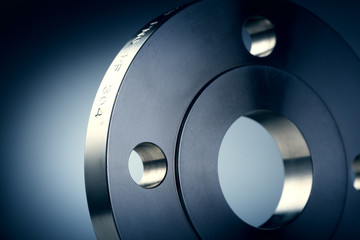
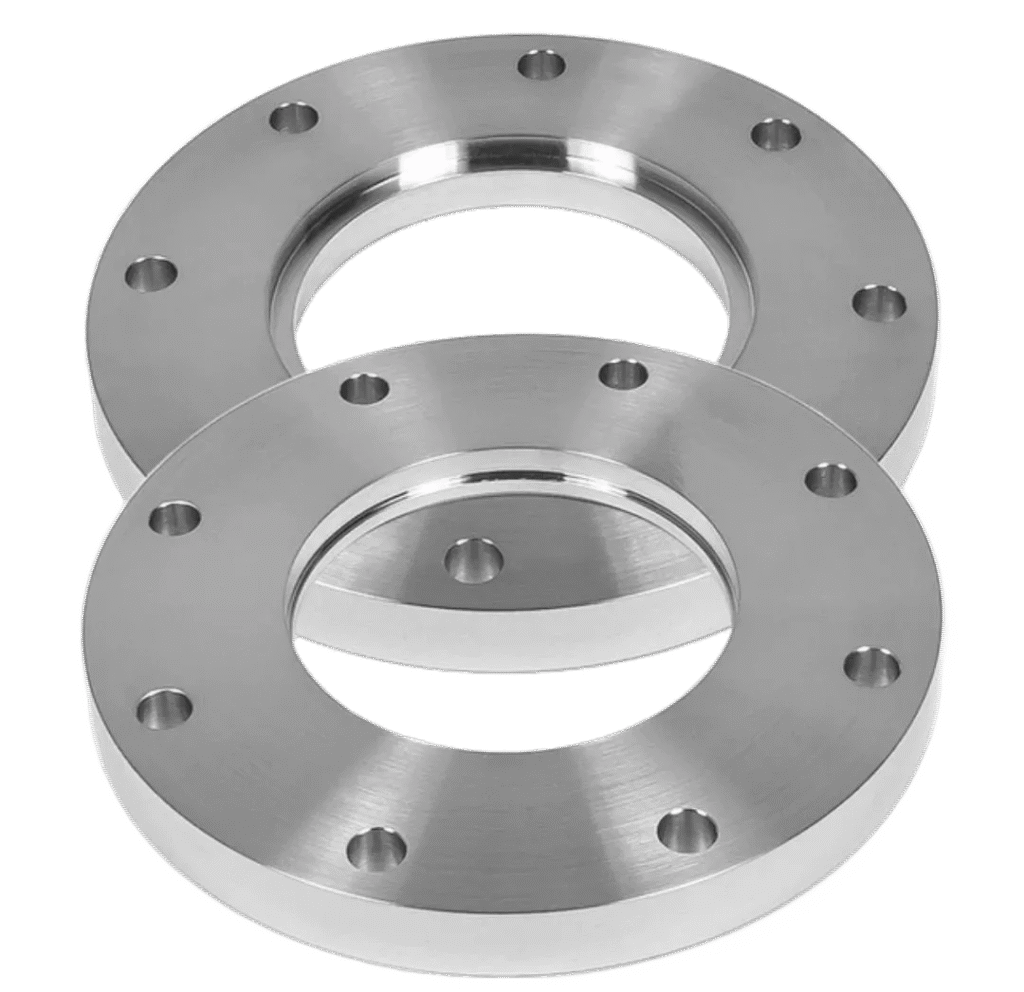
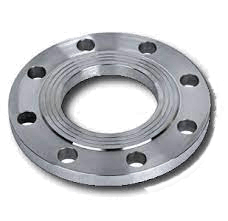
Plain Face Flange
In these flanges, when the connection is made, the surface of both flanges must be smooth and flat. The main application of this type is when two flanges are used in a system, or in cast water connections.Generally, cast iron and steel flanges that are used in low-pressure applications are manufactured in this type. According to flange standards (ASME B31.1), when a plain face flange made by iron casting molds is connected to carbon steel flanges, the use of raised face flanges must be removed (not used).
Male & Female Flange
This type of flange must always be manufactured as a matching pair. One flange surface has a protrusion (male) and the other has a recess (female). The design is based on specific proportions; typically the female part has a 3/16 inch groove depth, and the male part has a 1/4 inch protrusion. Male and female flanges are commonly used in applications such as heat exchanger shells, channel connections, and flanged covers.
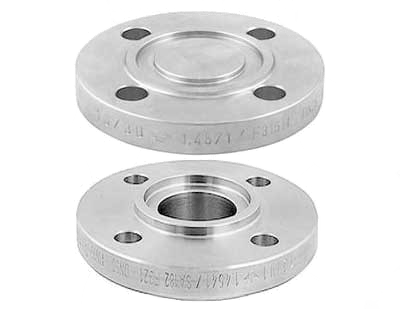
Tongue & Groove Flange
This type of flange is also used in pairs like plain face and male-female flanges. The main difference is that the gasket is placed on the inner diameter, and sealing is also ensured on the outer diameter. Because the tongue and groove do not have a continuous inner diameter (they are not fully extended), they provide a more controlled sealing system suitable for better alignment and improved leakage prevention.This is the main reason for preventing corrosion and wear. This structure creates a small gasket contact area, which reduces the load applied to the bolts and other components, resulting in higher efficiency.
Raised Face Flange
This type of flange is sealed with a flat gasket, which was previously made of asbestos but is now manufactured from environmentally friendly materials.It is designed for installation between two raised face flanges. In this type of flange, the surface that faces the mating flange and on which the gasket is placed is manufactured higher than the overall flange surface.
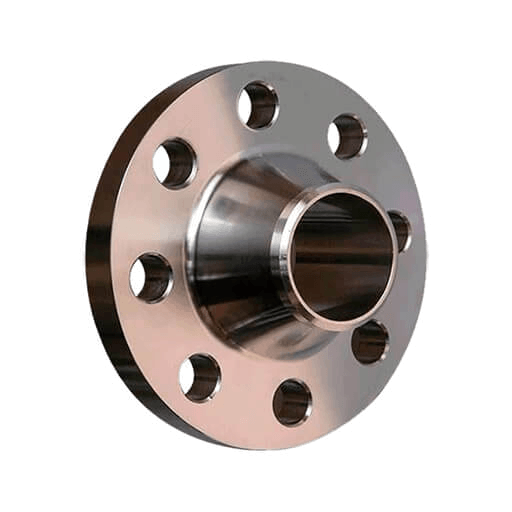
Weld Neck Flange
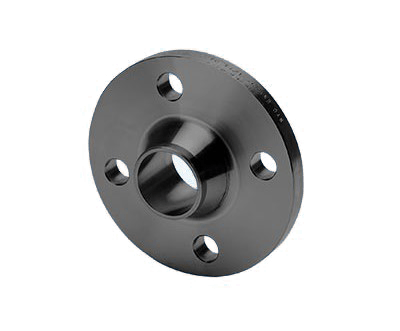
This type of flange has a tapered neck, whose diameter gradually decreases until it becomes equal to the diameter of the pipe at the end of the flange. As the name implies, it is welded and connected directly to the pipe. This shape is the main reason for the flange’s high strength and load-bearing capacity. Weld neck flanges are commonly used in high-pressure and sub-zero temperature applications. In addition, they are suitable for systems subjected to vibration and cyclic loading. Weld neck flanges can be easily identified by their conical hub (tapered neck).These tapered hubs are welded to the pipe wall or related fittings with a gentle slope, providing a smooth transition and reducing stress concentration.
Orifice Flange
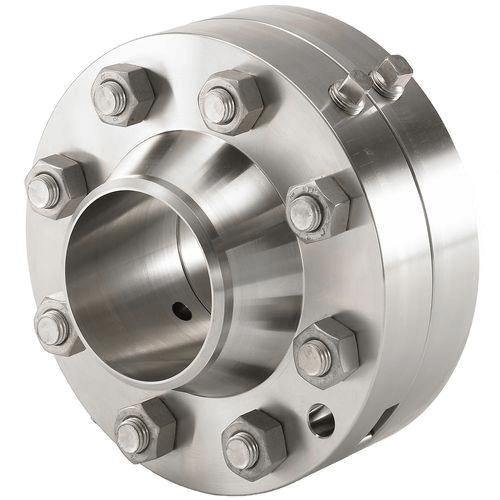
This type of flange is a weld neck flange.The primary application of orifice flanges is flow restriction and pressure reduction. The holes provided in the flange are used for measuring the flow rate of liquid or gas fluids.
Slip-On Flange
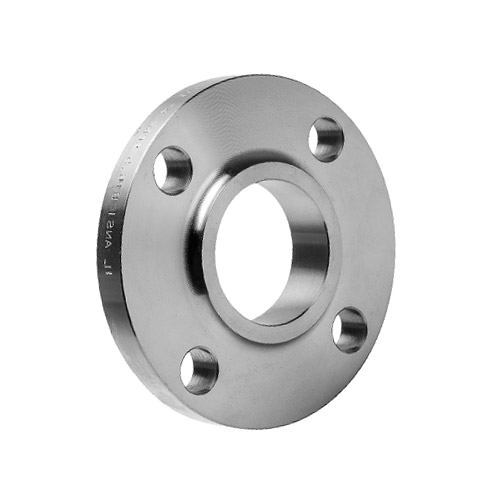
This type of flange can be used for all pressure classes and is commonly applied in Class 150 and Class 300 pressure systems.The internal weld length of a slip-on flange is greater than that of some other flange types, including weld neck flanges.Slip-on flanges are typically used in general-purpose piping systems because they are easy to install. However, their resistance to internal pressure and fatigue loading is lower than that of weld neck flanges.The calculated resistance strength of a slip-on flange under internal pressure is approximately two-thirds (⅔) that of a weld neck flange, and under fatigue conditions, its service life is reduced to approximately one-third (⅓).One of the disadvantages of a slip-on flange is that the pipes must first be welded and then the fittings aligned with them.It is not possible to directly connect a flange to an elbow or a flange to a tee, because these fittings do not have a straight end section and therefore cannot properly slide into the flange.
Socket Weld Flange
This type of flange has a recess (socket) for inserting the pipe. Socket weld flanges are welded both inside the socket and around the outside of the flange. When internal welding is performed, both the static strength and the fatigue resistance of the connection are improved. These flanges are commonly used in piping systems with high working pressure and small pipe diameters.Socket weld flanges were originally developed for use in small pipe sizes with high-pressure applications.Their static strength is approximately equal to that of slip-on flanges, but their fatigue resistance is about 50% greater than slip-on flanges.One of the disadvantages of socket weld flanges is the requirement to provide an expansion gap during installation.
Threaded Flange
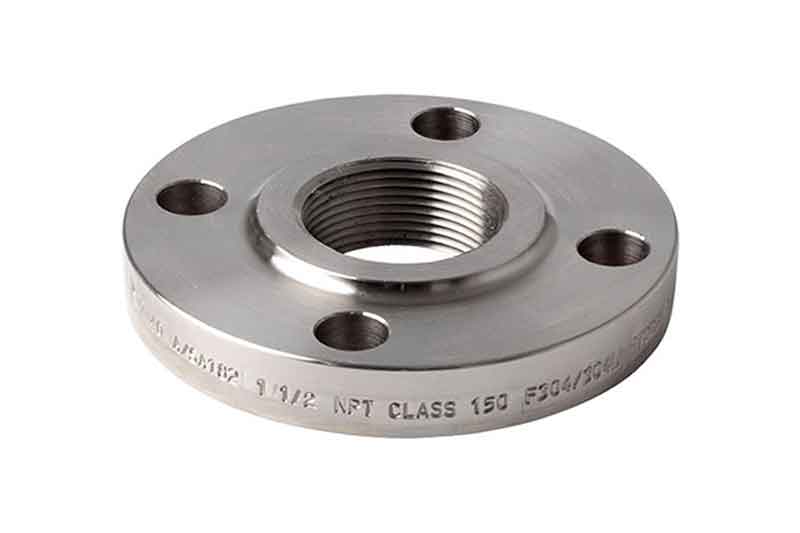
The inside of these flanges is machined with threads. A threaded flange, sometimes referred to as a screwed flange, is used in special applications where its main advantage is that it can be connected without welding.In some cases, a seal weld is also applied to ensure proper sealing.Although most of the stresses are applied as bending stresses in the area around the center of the flange, these flanges are suitable for use in higher-pressure and higher-temperature applications.
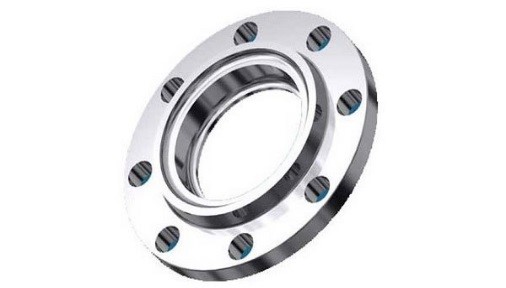
Ring Joint Flange
This type of flange may contain a raised face with machined grooves on its sealing surface. Ring joint flanges are generally used in high-pressure services (Class 600 and above) and in high-temperature applications, typically at temperatures above 800°F (427°C). This type of flange is not designed to withstand additional loads beyond bolt stress.Otherwise, it may cause the gasket to collapse or be damaged.
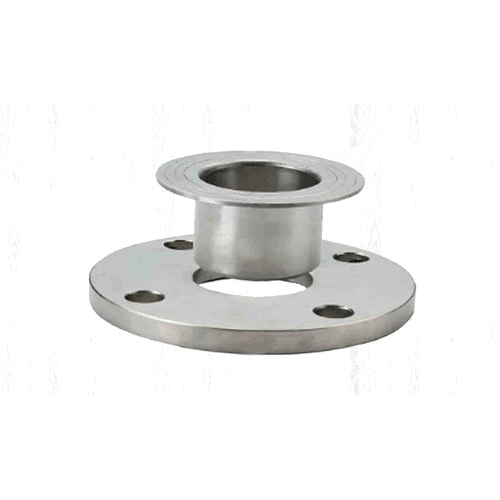
Lap Joint Flange
This type of flange has the ability to rotate around its axis, making bolt alignment and installation much easier. A lap joint flange is not in direct contact with the process fluid.One of its common applications is in systems that are highly exposed to corrosion and rust, where the use of this flange is also economically advantageous.However, its fatigue strength is significantly lower than that of a weld neck flange.
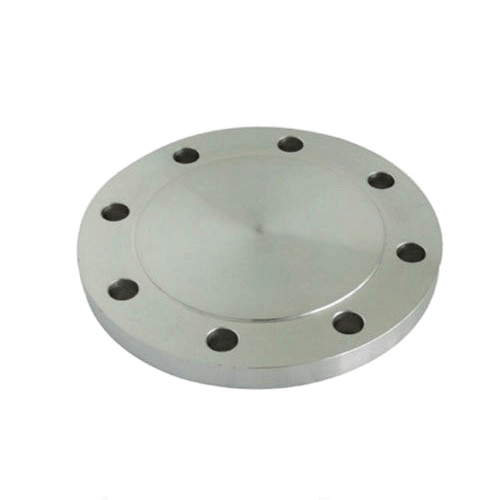
Blind Flange
Blind flanges are manufactured without a bore (hole) and are used to close the ends of pipelines, valves, and openings of pressure vessels.From the viewpoint of internal pressure and bolt loading, blind flanges, especially in large sizes, are considered the most stress-sensitive type of flange.
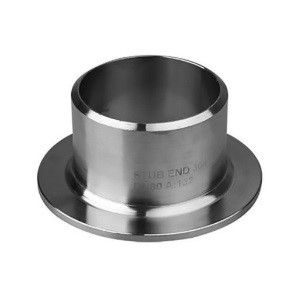
Stub End Flange
Stub end flanges are mostly used together with a lap joint flange as a backing flange. The stub end is one of the flange connection types used in low-pressure and non-critical applications, and it is considered one of the most economical methods for flange assembly and connection.