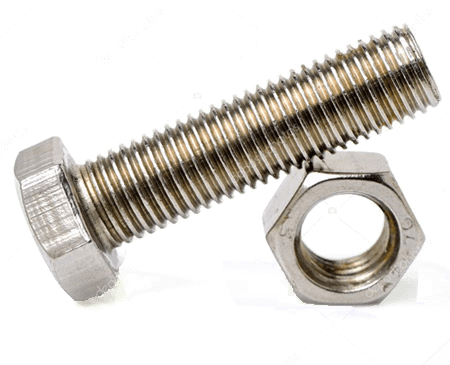
Bolt & Nut

Bolt & Nut

In industries, bolts and nuts are referred to as the main industrial fasteners, and they are used in very diverse forms with different grades, sizes, and mechanical and chemical properties.

Applications of bolts and nuts

Metal bolts and nuts, along with metal welding, are two methods used for connecting metal parts, plates, and structures together. Each of them has its own advantages and disadvantages; however, in general, the advantages of using bolts and nuts compared to metal welding are much more extensive. For example, bolts and nuts can be used to connect surfaces with different materials and different grades; for instance, steel metal surfaces can be connected to bronze surfaces. However, joining two surfaces of different materials by welding is not possible. However, to connect two surfaces using bolts and nuts, it is necessary to create surface holes inside the material. This leads to stress concentration at these points, which reduces the surface’s resistance against different types of stresses such as tensile, shear, and torsional stresses.
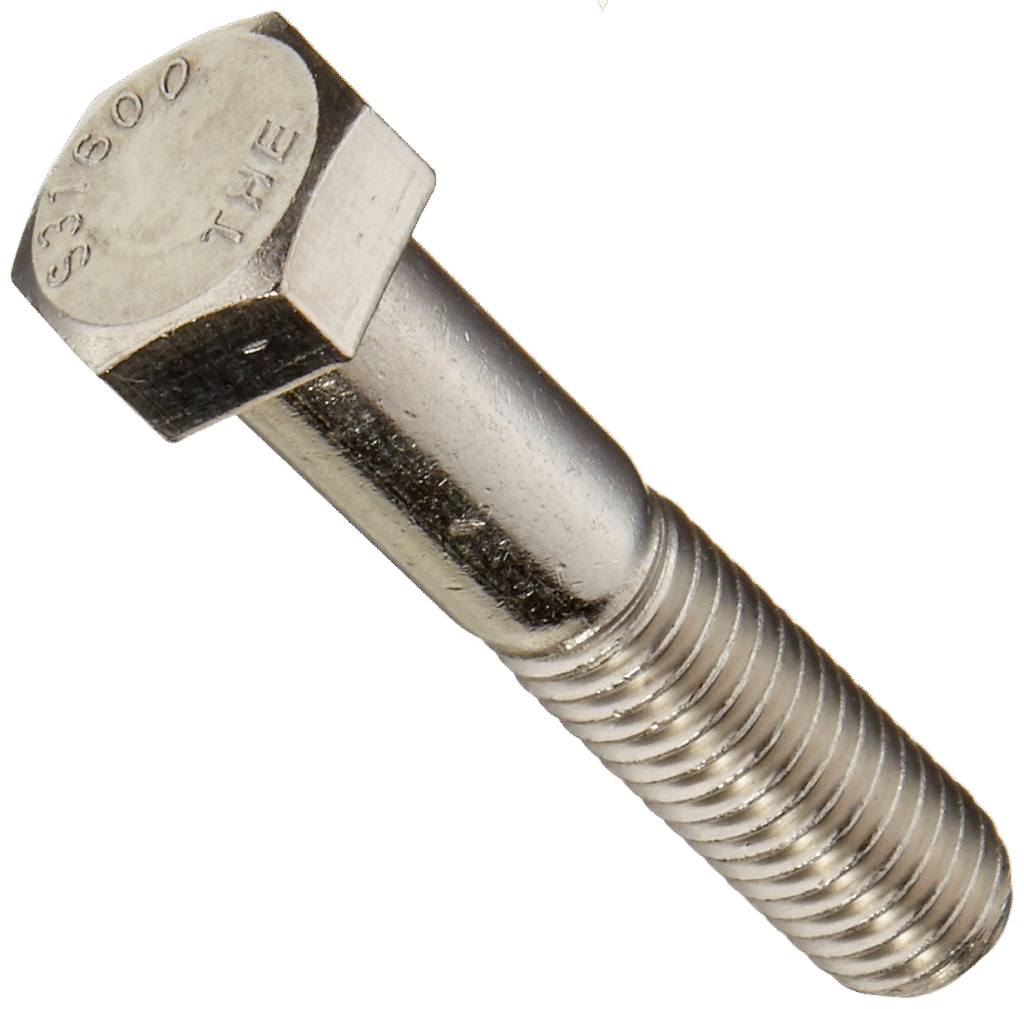
Hex bolts
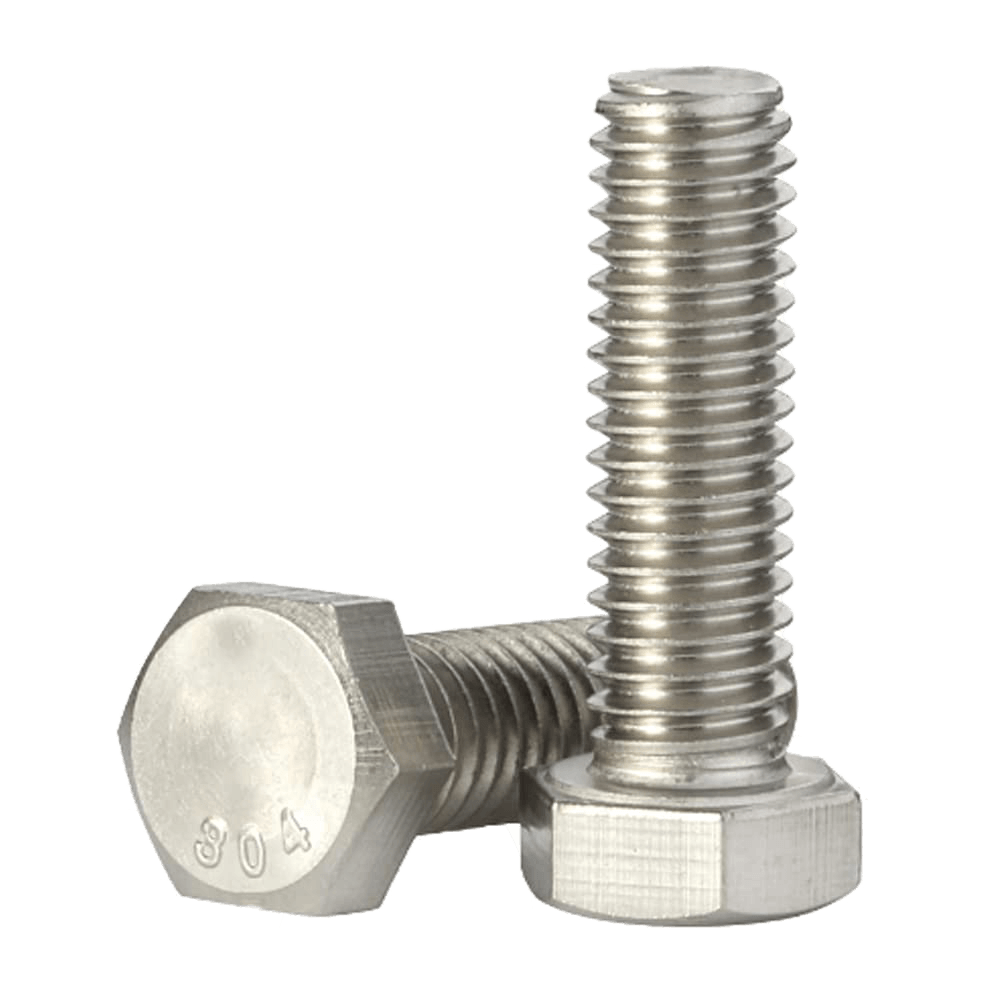
Hex bolts are one of the most basic and widely used types of industrial bolts and nuts. In this type, the bolt shank diameter remains constant along its length, and depending on the grade and material, they can be manufactured with either coarse thread (COARSE THREAD) or fine thread (FINE THREAD).  Hex bolts and nuts are also produced in different standards, including normal head sizes with DIN 933 (fully threaded) and DIN 931 (partially threaded) standards. In addition, they are also available with heavy structural heads, used for structural applications known as structural bolts and nuts, and are supplied in the market under the DIN 6914 standard.
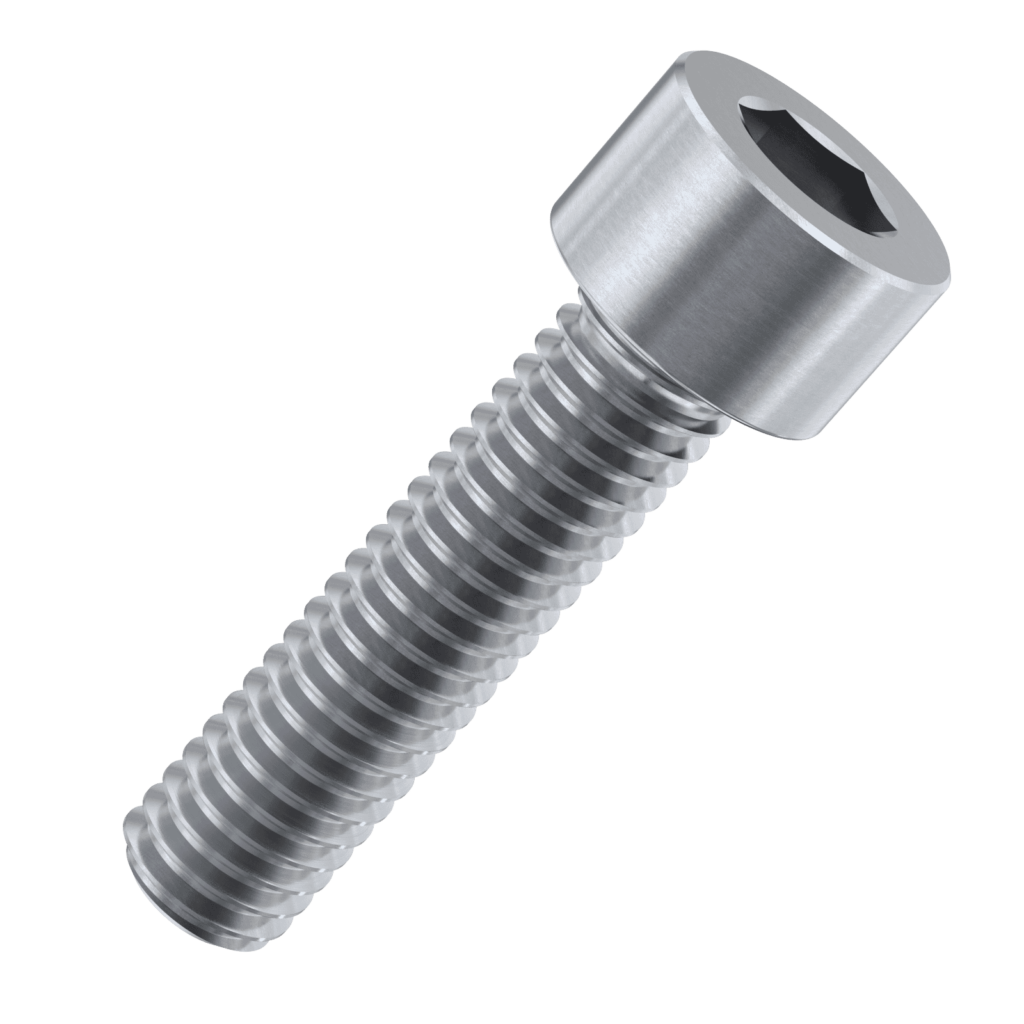
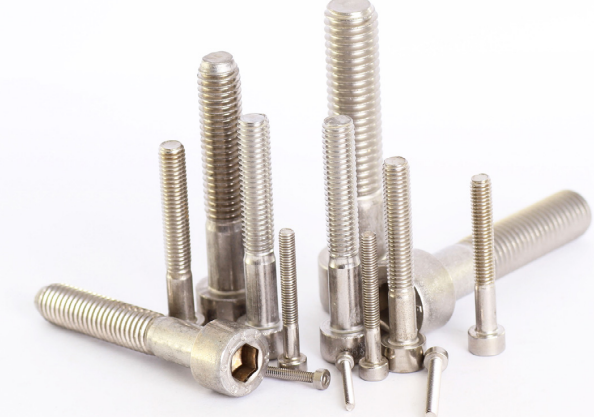
Allen Bolt (CAP head screw)
An Allen bolt is considered a modern type of industrial bolt and nut, which has a similar application to hex bolts and is used in industrial machinery connections.  Allen bolts are produced only as partially threaded (half-threaded) according to the standard, but based on market demand, fully threaded versions have also been manufactured. Allen bolts with standard DIN 912 are produced in two steel grades: 8.8 hardened steel and 12.9 high carbon steel, and they are supplied to the market in a plated (coated) form.Stainless steel Allen bolts are also available in the market in two grades: A2 and A4.
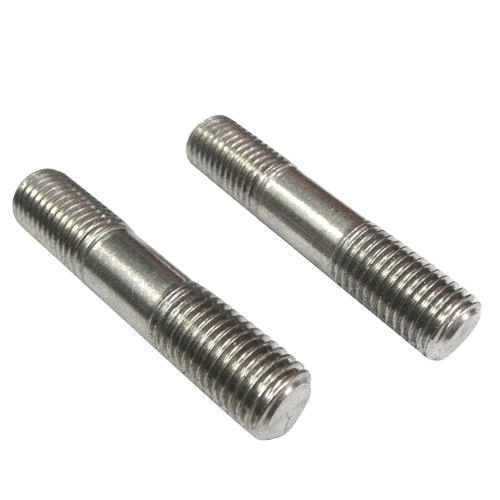
Stud Bolt
Stud bolts are a category of industrial fasteners that are fully threaded, meaning they are made in the form of a rod without a head and are threaded along their entire length. They are commonly available with coarse threads and often in inch-based thread standards in the market. اStud bolts are also produced in various grades, both in steel and stainless steel versions, and are mainly used in pipe and flange connections, industrial valves, and generally in the oil, gas, petrochemical, and water and wastewater industries.
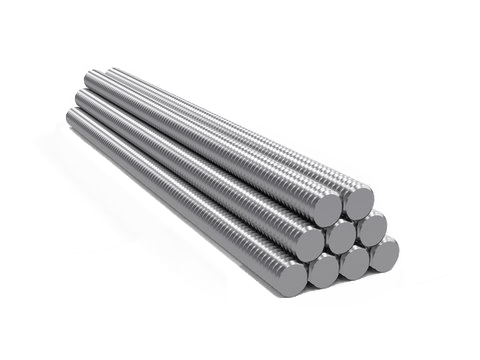
Threaded Rod
Threaded rods are similar to stud bolts, but the production standard of threaded rods is different, and they have lower sensitivity requirements compared to stud bolts.Threaded rods are also used in various steel grades with plated coatings, as well as being produced in stainless steel material. Threaded rods are widely used in the construction industry for connecting ducts and metal sheets.
پیچ و مهره استیل A2
They are also known as magneticsteel and are produced and supplied in large quantities in various types and forms of bolts and nuts.  Stainless steel bolts and nuts A2 are made from 304 stainless steel grade, and they have a slight ability to be attracted by a magnetic field; for this reason, they are known as magnetic stainless steel.
A4 Steel Bolts and Nuts
They are known as non-magnetic stainless steel, and they have perhaps the highest environmental resistance against rust and corrosion among stainless steel bolt grades.Stainless steel bolts and nuts A4 are produced using 316 stainless steel wire, which, in addition to chromium and nickel, also contains the metal element molybdenum in its composition.Stainless steel bolts and nuts A4 are not affected by magnetic fields, and for this reason they are known as non-magnetic stainless steel.